

Independent perfumers are small, artist-led houses that keep creative control over every formula and typically sell in limited runs rather than mass volumes. The fastest, lowest-risk way to explore them is through a discovery set: a handful of sample vials or sprays that let you test a scent on your own skin before committing to a full bottle. This guide shows you how to sample, evaluate, and buy from independent perfumers.
TL;DR:
- Independent perfumers produce small-batch scents driven by a single creator’s vision, often linked to a specific memory, story, or cause.
- Sampling via discovery sets allows thorough testing over full dry-down cycles before committing to a full bottle, reducing risk.
- Look for transparent ingredients, clear perfumer information, and ethical production practices to verify genuine independence.
- Unusual materials like metallic accords, vinyl notes, and rare botanicals are common, as independents are not constrained by mass-market appeal.
- Buying directly from makers or reputable boutiques ensures authenticity, with transparency on formulation, production, and return policies.
Table of Contents
- What makes a perfumer independent?
- How do you sample and discover independent perfumers?
- Why Rook Perfumes builds discovery sets the way it does
- What should you look for when choosing an independent perfumer?
- What ingredients and unusual notes do independent perfumers use?
- Where should you buy independent perfumes, and how do you handle the purchase?
- Where does independent perfumery come from, and what drives it?
- What does the community around independent perfumers look like?
- Why independent perfumery deserves your attention
- Try a discovery set and start exploring independent scent
- Sources
What makes a perfumer independent?
An independent perfumer owns the creative decisions behind a scent from first sketch to finished bottle. No brand committee dilutes the concept, no marketing panel vetoes an unusual note. That single fact shapes almost everything else about how these houses work, smell, and sell.
Mainstream fragrance houses design for the broadest possible audience, softening anything too strange before it reaches shelves. Independent makers do the opposite: they build around a specific idea, memory, or story, then produce it in small batches rather than scaling it into something generic. You can often trace a fragrance back to a single perfumer’s signature style across their whole collection, something you rarely find at a large house where dozens of noses might work under one brand name.
A few traits reliably separate genuine independents from brands simply marketed as “niche”:
- Creative ownership: one perfumer or a tiny team makes the final call on every formula.
- Small-batch production: runs are limited, sometimes numbering in the hundreds rather than thousands of units.
- Narrative-driven concepts: each scent usually ties to a specific memory, place, or cause rather than a generic mood board.
- Varied business models: some sell direct-to-consumer online, some run a working atelier, others take fully bespoke commissions built around a client questionnaire and personalised blending, as Prana6’s bespoke process demonstrates.
Many independent perfumers trained inside large fragrance houses before striking out alone. Antoine Lie’s move into independent, avant-garde work is a well-documented example of a career built on leaving the constraints of commercial perfumery behind for creative freedom.
How do you sample and discover independent perfumers?
Discovery sets exist because full bottles are an expensive way to find out you dislike a fragrance. Independent houses know this, which is why sample formats have become the standard entry point into their catalogues rather than an afterthought.
Most discovery kits contain travel-sized vials or sprays in small quantities. A small vial is usually enough for a few wears on skin, good for a first impression. Larger sprays provide enough product to test the scent across different weather, clothing, and moods, which matters because skin chemistry and humidity both change how a fragrance reads.
Here is a simple method for testing any sample properly:
- Apply to skin, not paper. Paper tells you what the perfumer intended; skin tells you what you’ll actually experience.
- Track the opening (first 15 minutes). This is the loudest, least representative phase, so don’t judge the whole scent on it.
- Assess the heart (30 minutes to 2 hours). This is usually the fragrance’s true character.
- Note the dry-down (4 hours plus). Many independent scents reveal their most interesting facets here, often quiet, skin-close, and completely different from the opening.
- Repeat over at least two separate wears before deciding, since weather and diet can shift how a scent performs.
Pro Tip: Wear one sample for a full day without checking your phone for reviews or notes lists. Your unbiased first reaction, formed before you know what you’re “supposed” to smell, is usually the most honest signal you’ll get.
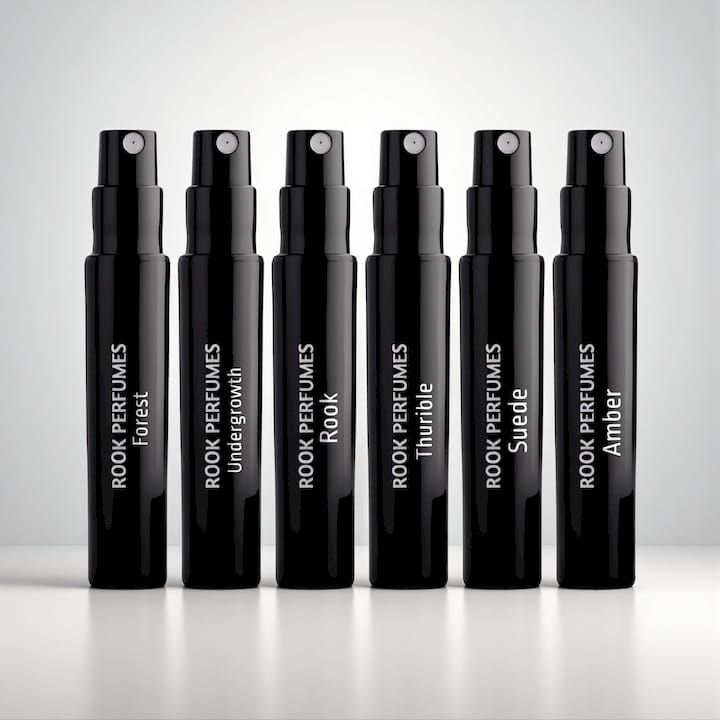
Buy discovery sets direct from the maker’s own site where possible. Rook Perfumes’ Fragrance Discovery Sample Sets follow this exact structure, giving you a practical way to put the method above into practice.
Why Rook Perfumes builds discovery sets the way it does
Some sample sets address a problem that trips up a lot of first-time indie shoppers: buying blind. Sets sized to allow sufficient testing of dry-down can be more helpful than those prioritizing variety by including many scents in smaller amounts.
Each set is built around a few consistent principles:
- Cruelty-free formulation across the whole range, with no exceptions made for individual scents.
- Unisex composition, so nothing is filtered by gender before you’ve even smelled it.
- A story behind every fragrance, including advocacy-led releases such as our Scent for Gaza project, which carries a specific cultural narrative rather than a generic tagline.
Once you’ve worn a sample through its full dry-down and know it’s right for you, moving to a full bottle is straightforward, and some sets include a voucher that reduces the cost of that next step. If you’re buying as a gift, pick a set with a wider spread of scent families so the recipient has genuine choice rather than three near-identical florals.
What should you look for when choosing an independent perfumer?
Not every brand calling itself “niche” or “artisan” deserves the label. A genuine independent maker is usually easy to verify if you know what to check before you buy.
Run through this checklist before parting with your money:
- Transparency about the perfumer. Can you find a name, a background, a reason the brand exists?
- Sample availability. A confident maker lets you test before you commit to a full bottle.
- Ingredient clarity. Look for real specificity, named materials and accord families, rather than vague marketing language like “exotic blend.”
- A coherent story. Independent scents are usually built around a specific memory, place, or cause, and the brand should be able to explain it plainly.
- Visible production practices. Ethical claims (cruelty-free, sustainable sourcing) should be stated clearly, not buried in fine print.
Red flags matter just as much as good signs. Be wary of brands offering no samples at all, ones that dodge direct questions about ingredients, or sellers with no clear returns policy on unopened bottles.
Pro Tip: Email the brand directly and ask one specific question, such as which facility blends their fragrances or what a particular note is sourced from. A real independent house will usually answer in detail; a reseller dropshipping unbranded oils often won’t reply at all.
Before buying, ask a maker or seller: who formulates the scent, where is it produced, what’s the returns policy, and can you get a sample first? If those answers come easily, you’re likely dealing with a genuine independent perfumer.
What ingredients and unusual notes do independent perfumers use?
Freedom from mass-market pressure is what lets independent perfumers experiment with materials a large house would never risk on a flagship release. Small production runs mean a strange or divisive note doesn’t need to sell to millions of people, only to the smaller audience who genuinely wants it.
That freedom shows up in some genuinely unusual choices:
- Metallic and synthetic accords that mimic cold steel, ozone, or static electricity rather than anything botanical.
- Vinyl and rubber-adjacent notes, often used to evoke a specific memory such as a record shop or a raincoat.
- Rare or unconventional botanicals sourced in small quantities, sometimes shifting from batch to batch as availability changes.
Sourcing these materials at a workable scale is where specialist production facilities come in. Houses like Accords & Parfums give independent perfumers access to elite-grade raw materials and mixing technology that would otherwise be out of reach for a one-person studio, while letting the perfumer keep full creative control over the final formula.
Unusual ingredients can behave unpredictably on skin. Some synthetic accords have exceptional projection but fade fast; some rare botanicals have the opposite problem, sitting quiet and close to the skin but lasting for hours. Testing over a full wear, as covered earlier, is the only way to know how a specific formula will behave on you.
Where should you buy independent perfumes, and how do you handle the purchase?
Buying direct from the maker’s own website is generally the safest route, since it removes any question about authenticity or batch freshness. Reputable boutiques and curated platforms are the next best option, particularly ones that specialise in niche and independent stock rather than stocking a token indie shelf alongside mainstream brands.
Before buying from any stockist, check a few practical things:
- Batch codes or production dates, especially for natural-heavy formulas that can shift with age.
- Shipping terms and VAT treatment, particularly if you’re ordering from outside the seller’s home country.
- Returns policy on unopened bottles, which any confident independent brand should state clearly.
- Editorial recognition, since curated lists such as The Perfume Society’s British niche brands feature can help confirm a house’s standing before you buy.
International buyers should factor in customs charges and longer delivery windows, and should be especially cautious of resellers offering suspiciously large discounts on small-batch scents, since limited production runs rarely get discounted in bulk. If a listing has no perfumer name, no ingredient detail, and no samples, treat it as a warning sign rather than a bargain.
Where does independent perfumery come from, and what drives it?
Independent perfumery isn’t a new trend dressed up in fresh packaging. It grew out of a long tradition of artisan perfumers working outside major fragrance conglomerates, often trained in classical technique but drawn to ideas too strange or personal for a commercial brief.
The philosophy underpinning most independent houses is straightforward: scent as narrative rather than scent as product. A mainstream release is usually built to appeal broadly and sell in volume. An independent scent is usually built to say something specific, a memory, a place, a piece of cultural history, even a social cause, and it accepts that not everyone will connect with it.
This is why many independent perfumers combine formal training with genuinely artisanal working methods. Profiles such as Sensaba’s perfumer background show makers who trained in laboratory technique and also engage with preservation work, contributing to bodies like the Osmothèque that safeguard historic formulas. That dual identity, part scientist, part storyteller, is fairly typical of the independent scene, and it’s part of why indie scents often feel more considered than experimental.
The result is a philosophy built on smallness by choice rather than by limitation. Producing fewer bottles isn’t a compromise for most independent perfumers; it’s the entire point, since it’s what allows the creative risk-taking that defines the category in the first place.
What does the community around independent perfumers look like?
Independent perfumery has built a genuinely active community around it, one that behaves quite differently from mainstream fragrance culture. Enthusiasts trade impressions, compare batch variations, and discuss dry-down performance in ways that go far beyond a five-star rating.
Fragrance forums and dedicated review communities remain the backbone of this culture, where wearers post detailed, wear-by-wear breakdowns rather than quick verdicts. Seasonal roundups also play a real role in how people discover new houses. Features grouping independent scents by season, such as Earl of East’s autumn perfume edit, help readers match unfamiliar notes to weather and mood before they buy, which matters more with indie scents than mainstream ones because there’s less brand recognition to lean on.
In-person events, pop-ups, indie fragrance fairs, and small brand meet-ups have also grown steadily, giving wearers a chance to test dozens of formulas in one sitting and talk directly to the person who made them. That direct access to the perfumer, rather than a brand representative, is something you simply don’t get with a mainstream house.
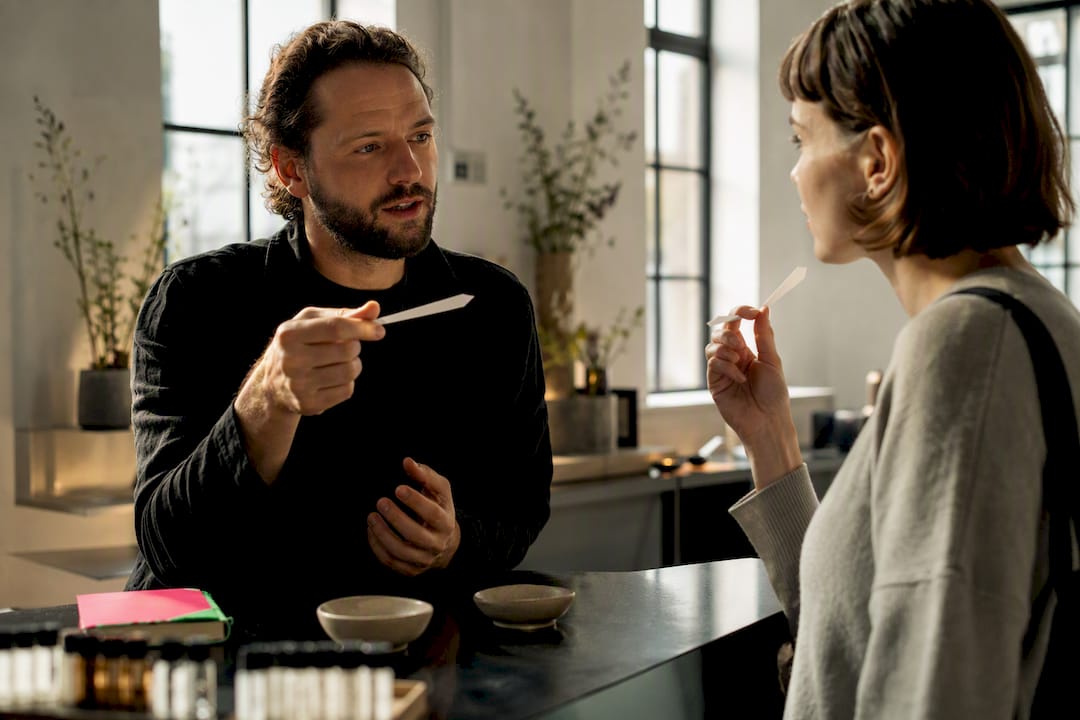
Storytelling sits at the centre of most of this culture. Brands that communicate a scent’s inspiration clearly tend to build the strongest followings, a dynamic explored in broader terms in research on storytelling’s role in fashion and beauty marketing. Independent perfumery, more than most product categories, thrives on that connection between maker and wearer.
Why independent perfumery deserves your attention
What draws people to independent perfumers isn’t rarity for its own sake. It’s the sense that a formula came from one person’s specific point of view rather than a boardroom’s idea of what should sell. That distinction is easy to say and harder to actually notice until you’ve worn a scent built around a genuine memory next to one built around a market gap.
Some independent perfumers embrace philosophies of cruelty-free, unisex, memory-led fragrances that aren’t designed to please everyone at once. Discovery sets can let you test this philosophy for yourself before you spend on a full bottle, without pressure or guesswork about whether a scent will suit you.
— Rook
Try a discovery set and start exploring independent scent
Reading about independent perfumers only gets you so far. The real test happens on your own skin, over a full day, through opening, heart, and dry-down.
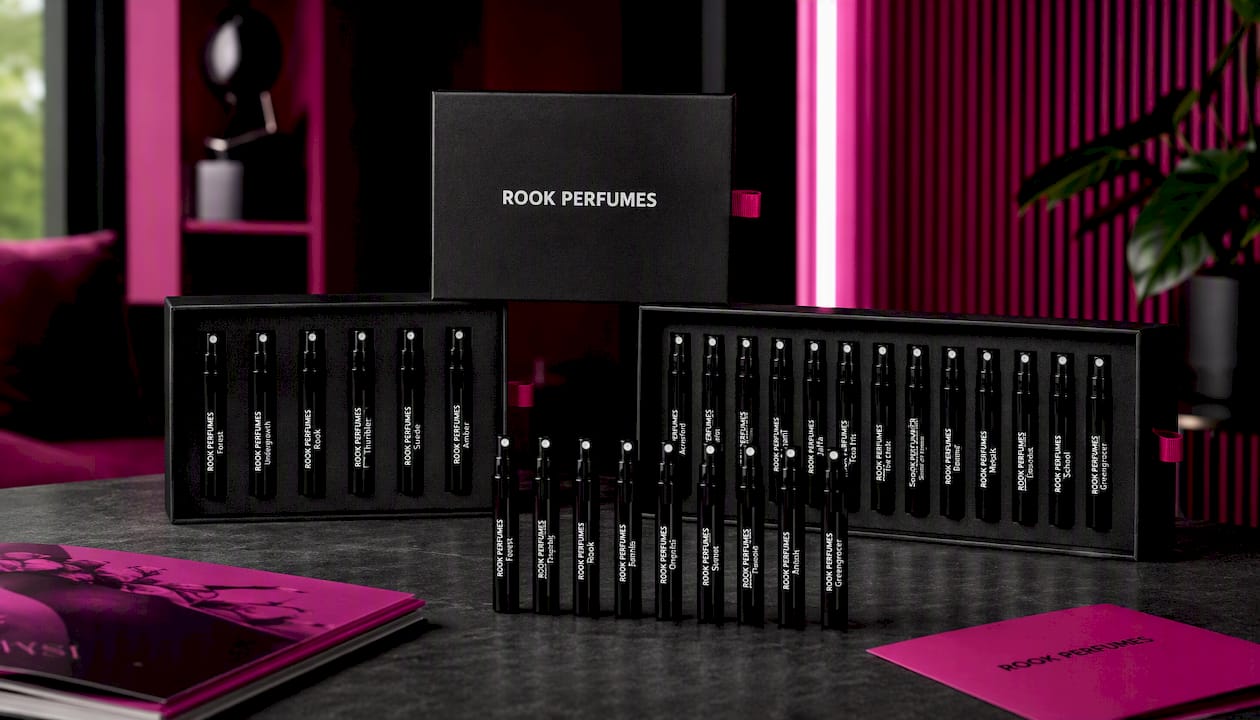
Rook Perfumes offers three practical ways to start. The Discovery Set Sampler is built for first-timers who want a broad introduction across our range without committing to a full bottle. THE ENTHUSIAST SET + £25 VOUCHER suits anyone already familiar with niche scent who wants a deeper spread, plus a voucher that comes off a future full-size purchase, making it a strong gifting option too. For anyone testing the waters on a tighter budget, the Fragrance Discovery Sample Sets include a £20 voucher, giving you a wide sampling experience at a lower upfront cost.
Each set solves the same problem: buying full-price bottles blind is expensive and risky. Pick the set that matches where you are in your exploration, wear each sample through a full day as outlined earlier, and use the included voucher when you find the one that’s genuinely yours.
Sources
- British niche brands we love
- Accords & Parfums (production facilities)
- Sensaba — the perfumer
- Antoine Lie – Independent Avant-Garde Perfumer
0 comments